

¥12,800 ($80.78)
オンライン企画 第一回「南方の日常」
Online Selection Vol.1
Everyday Objects from Southern China
————————
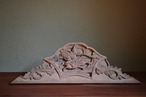
【古建築の木彫雀替】
杉材
60cmX18.5cm, H2cm
清末-民国期
,福建
柱と梁の接合部に取り付けられた伝統建築の木製構造部材。雀替は宋代には「角替」と呼ばれ、建物を補強するとともに装飾的な役割も担った。明・清時代以降は彫刻表現が発達し、寺院や祠堂、民家の門まわりを彩る重要な意匠となった。
本作は馬上の武人を力強く表した人物雀替で、中国南方の伝統演劇や歴史物語に由来する題材を思わせる。人物の装いや姿勢は、福建南部で広く親しまれてきた『楊家将』の女将・穆桂英の表現にも通じるが、特定の人物を断定することは難しい。こうした武人像は、勇気や忠義、家運隆盛への願いを象徴する吉祥意匠として、祠堂や民家の装飾に用いられた。
作風や彩色の痕跡からは、清末から民国期頃の福建地方の作と考えられる。長年の風化によって現れた木肌や彫りの陰影には、建築部材として使われてきた時間の痕跡が静かに刻まれている。
【Carved Wooden Architectural Bracket】
Cedar Wood
60cmX18.5cm, H2cm
Late Qing to Republican Period
Fujian Province, China
A carved architectural bracket from a traditional timber structure, originally installed between a pillar and beam. While serving a structural purpose, brackets of this type gradually evolved into decorative elements that adorned temples, ancestral halls, and residences throughout southern China.
The relief depicts a mounted warrior inspired by traditional opera and historical legends. The figure closely recalls representations of Mu Guiying, the celebrated female general of the Yang Family Generals stories, a character especially popular in southern Fujian. However, without an identifying inscription, the exact identity of the figure remains uncertain. Images of heroic warriors such as this were commonly employed as auspicious motifs symbolizing courage, loyalty, and prosperity.
Based on its carving style and traces of polychrome decoration, the work is likely to date from the late Qing to Republican period. Its weathered surface and softened carving marks preserve the quiet traces of a life once embedded in everyday architecture.
***
古道具の性質をご理解の上、ご購入をお願い致します。
輸送破損以外のご返金はできませんので、予めご了承ください。
Please understand the nature of antique works before making a purchase.
Please notice that refund is not accepted for reasons except shipping damage. Thank you for your understanding.